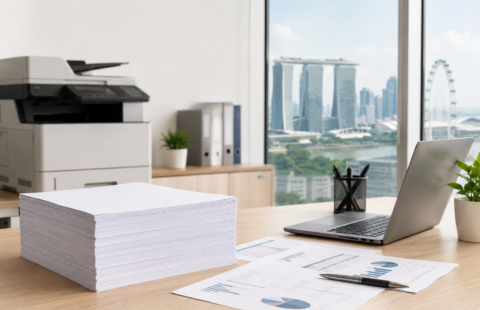
A4 paper is one of the most widely used paper sizes in offices, schools and businesses worldwide. Despite its popularity, many people are unfamiliar with its exact dimensions and how it compares to other paper formats.
Understanding A4 paper dimensions helps organisations choose the right paper for printing, copying and document management. Businesses looking for reliable office printing supplies may also browse our A4 paper supplies to compare options suitable for everyday use.
In this guide, we explain A4 paper dimensions in centimetres, millimetres and inches, as well as how this paper size fits within the international paper sizing system.
Table of Contents
- What Are the Dimensions of A4 Paper?
- A4 Paper Size in Millimetres
- A4 Paper Size in Centimetres
- A4 Paper Size in Inches
- Why A4 Paper Is the Global Standard
- Ideal for Everyday Documents
- Compatible with Office Printers
- Efficient Paper Usage
- How A4 Paper Fits Into the A-Series System
- A4 vs A3 Paper: Key Differences Explained
- Common Uses of A4 Paper in Offices
- Reports and Documents
- Invoices and Administrative Paperwork
- Training Materials
- Office Printing
- Choosing the Right A4 Paper for Your Office
- Paper Weight (GSM)
- Printing Quality
- Bulk Supply Considerations
- Choosing A4 Printing Paper for Your Needs
- Keeping Daily Printing Needs Running Smoothly
- Final Thoughts
What Are the Dimensions of A4 Paper?
A4 paper belongs to the ISO 216 international paper size standard, which defines paper dimensions used in most countries worldwide.
The exact dimensions of A4 paper are:
A4 Paper Size in Millimetres (210mm x 297mm)
Millimetres are the most commonly used measurement unit for paper specifications in printing and manufacturing industries.
Most office printers, photocopiers and printing systems reference A4 dimensions using millimetres.
A4 Paper Size in Centimetres (21cm x 29.7cm)
Centimetres are commonly used when discussing document layouts and educational materials.
This format is especially useful when preparing reports, worksheets and business paperwork.
A4 Paper Size in Inches
Inches are commonly referenced in design software and printing systems configured using imperial units.
This measurement is often used in international printing environments.
These dimensions make A4 one of the most practical and widely used paper formats for offices, schools and commercial printing.
Why A4 Paper Is the Global Standard
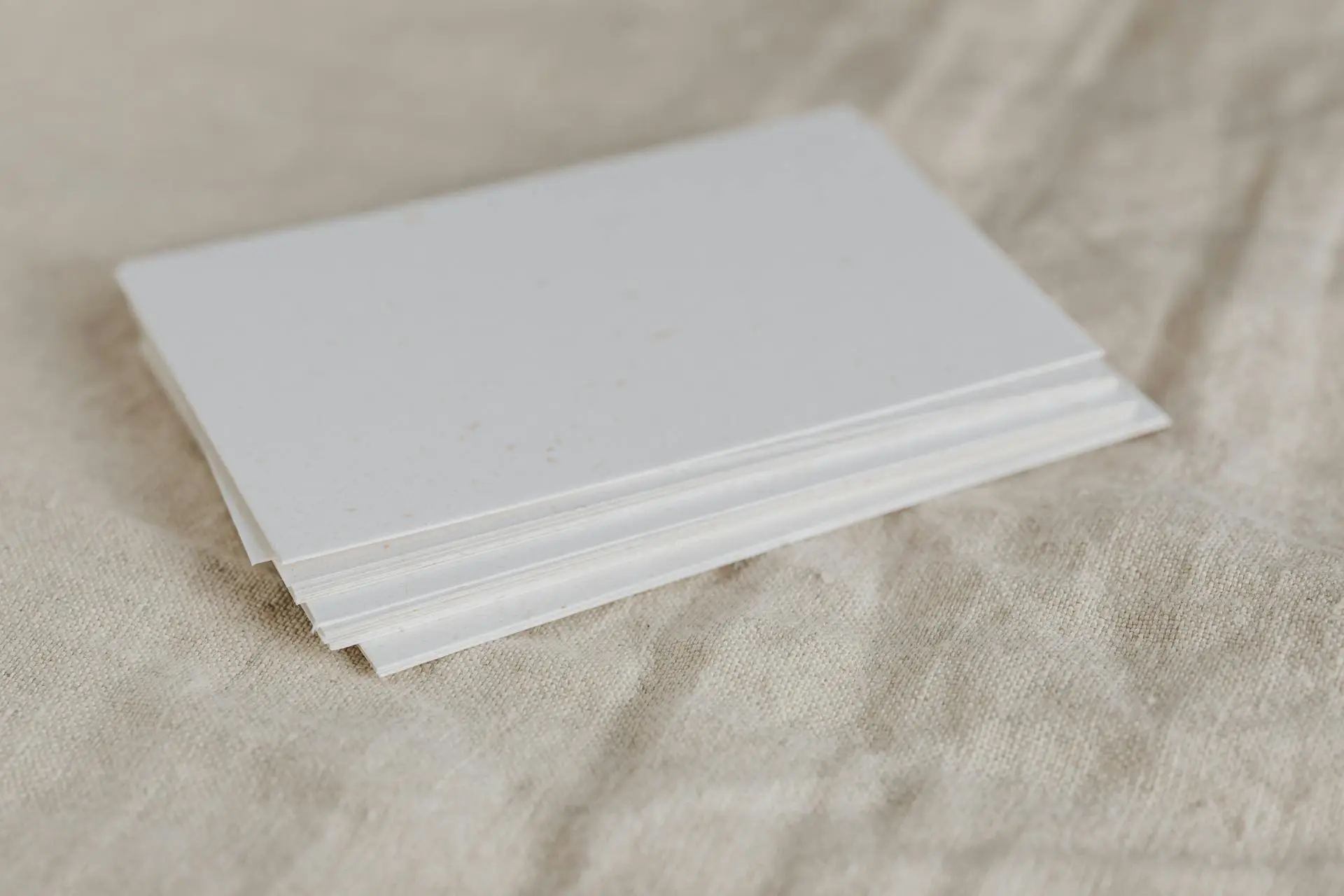
A4 paper remains the standard document size because it balances practicality, readability and efficient paper usage.
Ideal for Everyday Documents
A4 paper provides sufficient space for:
- reports
- invoices
- contracts
- worksheets
- letters
- administrative paperwork
Compatible with Office Printers
Most office printers, scanners and photocopiers are specifically designed to support A4 printing.
This makes A4 one of the most operationally efficient paper sizes for businesses.
Efficient Paper Usage
A4 belongs to the A-series paper system, which is designed so that each paper size is exactly half the size of the previous one. This allows documents to be scaled easily without wasting paper.
How A4 Paper Fits Into the A-Series System
The A-series paper sizes are based on a mathematical ratio that allows documents to be enlarged or reduced without changing proportions.
Common sizes include:
- A0
- A1
- A2
- A3
- A4
- A5
Each size is half the size of the previous one.
For example:
- A3 = twice the size of A4
- A5 = half the size of A4
A4 vs A3 Paper: What’s the Difference?
Another commonly used office paper size is A3.
Understanding the difference between A3 and A4 paper helps businesses select the correct format for their printing needs.
A4 paper (210mm x 297mm)
Common uses:
- office documents
- letters
- reports
- invoices
- worksheets
A3 Paper (297mm x 420mm)
Common uses:
- posters
- diagrams
- presentations
- large charts
Because A3 is twice the size of A4, it is often used when more space is needed for visual layouts.
Larger documents such as posters or diagrams may require A3 paper. You can read our guide on A3 paper size explained to learn more about its dimensions and uses.
Common Uses of A4 Paper in Offices

A4 paper is one of the most widely used office supplies in workplaces around the world.
Some common uses include:
Reports and Documents
Businesses frequently print internal reports, meeting notes and project documentation using A4 paper.
Invoices and Administrative Paperwork
Invoices, purchase orders and financial records are typically printed on A4 paper.
Training Materials
Companies often use A4 paper for manuals, onboarding materials and internal guides. Certain businesses also use coloured printable paper for presentations, notices and creative office materials.
Office Printing
Companies often use A4 paper for manuals, onboarding materials and internal guides.
Choosing the Right A4 Paper for Your Office
Not all A4 paper is the same. Businesses should consider several factors when selecting the right printing paper. For businesses choosing paper for everyday office use, our copy paper Singapore guide explains how to select suitable copy paper based on paper size, GSM, printer use and document purpose.
Paper Weight (GSM)
Paper weight is measured in GSM (grams per square metre).
Common options include:
- 70 GSM
- 75 GSM
- 80 GSM
80 GSM is widely used in offices because it provides a good balance between durability and printing quality. If you are deciding between different paper weights, you may also read our guide on 70gsm vs 80gsm paper for office printing.
Printing Quality
High-quality paper reduces paper jams and ensures smoother printing performance.
Many offices prefer trusted brands such as Double A or PaperOne A4 copy paper because they provide consistent printing quality and reliable performance.
Bulk Supply for Offices
Bulk Supply for Offices
Businesses that rely heavily on printed documents often purchase A4 paper in bulk to maintain operational consistency and reduce procurement disruptions. For offices that want to manage paper stock more consistently, our bulk copy paper Singapore guide explains how businesses can plan copy paper supply by the box and reduce last-minute reordering.
If you are comparing wholesale purchasing options, you may also explore our A4 paper wholesale Singapore guide and A4 paper price Singapore guide.
These guides explain stock planning, pricing structures, bulk purchasing considerations and cost-saving strategies for businesses handling regular printing operations.
Choosing A4 Printing Paper for Your Needs
While understanding A4 paper size is important, businesses also need to select the right type of paper for their printing requirements.
Factors such as paper weight (GSM), print quality and usage volume can influence the choice of paper.
For example:
70gsm paper is often used for high-volume internal printing
80gsm paper is commonly preferred for reports and client-facing documents.
If your organisation is sourcing document supplies, you may explore our printing paper range which includes commonly used A4 copy paper suitable for offices, schools and commercial environments.
Keeping Daily Printing Needs Running Smoothly

Everyday office operations often depend on a steady flow of printed documents, from reports and invoices to internal paperwork. WholesaleSupplies.sg supports organisations by ensuring a steady supply of commonly used paper formats, helping teams maintain smooth and uninterrupted workflows — whether for routine office use or larger volume requirements.
Businesses sourcing paper for daily office use may explore our printing paper range for high-volume printing and wholesale supply needs. Organisations that frequently print reports, forms and administrative documents may also browse our A4 paper collection for commonly used office printing formats.
For businesses looking for reliable everyday office printing paper, our Mei Cheng A4 Paper is commonly used for reports, invoices and bulk document printing environments.
Final Thoughts
Understanding A4 paper size and dimensions helps businesses format documents correctly and maintain efficient printing operations.
As one of the most widely used paper formats worldwide, A4 paper remains the standard choice for offices, schools and organisations that rely on everyday printing.
Whether you are preparing reports, invoices or training materials, choosing the right printing paper ensures clarity, professionalism and reliability.
If your organisation requires a dependable supply of office printing materials, contact WholesaleSupplies.sg today and our team will be happy to assist with your requirements.